Testimonials · ExamplesTestimonial Video Examples
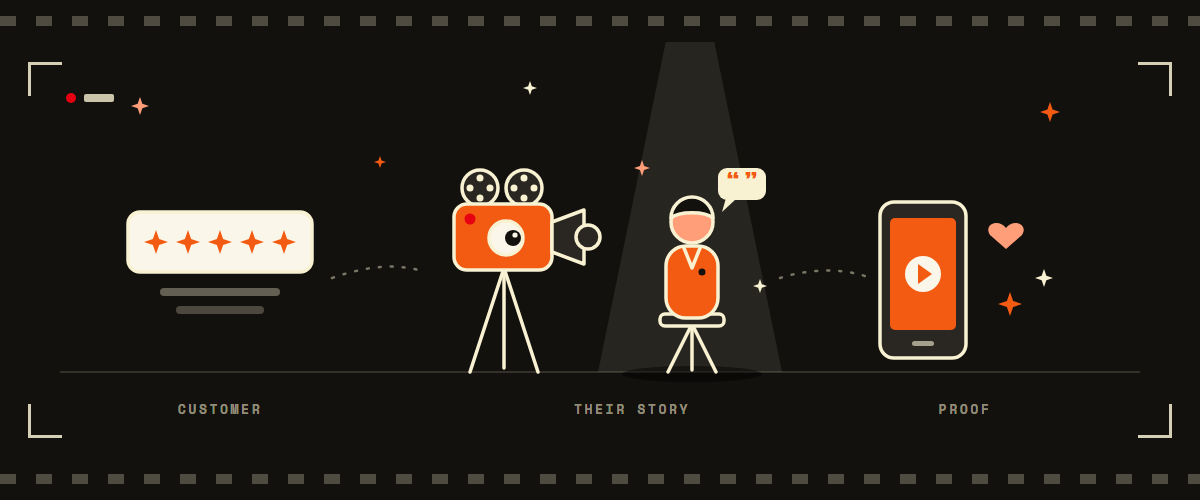
Good testimonial videos come in a few repeatable formats: the before-and-after story, the objection buster, the case study, the 15-second social clip, the day in the life and the employee story. What they share is specifics: a real customer, in their own words, naming the problem, the doubt they had and what changed, filmed where the work actually happened.
When people search for testimonial video examples, they usually want to know what to film. Below are six formats, what each is for, an example of the kind of moment that makes it work, and the questions that get you there. The example lines are illustrations for fictional businesses; the shape is what to copy.
6 testimonial video formats, with examples
1. The before-and-after story
The classic: life before you, the decision, life after. Best on your website and in sales follow-ups, at 60 to 120 seconds.
Example moment: a clinic owner: “We used to lose a whole morning to paperwork. Now the front desk closes the day at six.”
Questions that get it: What was going on before? What changed after? What does a normal day look like now?
2. The objection buster
One customer answers the single doubt that stalls most of your deals: price, risk, quality or “why you and not the bigger name?”. Sales teams send these on WhatsApp after a first call.
Example moment: a factory manager: “I thought a smaller supplier meant more delays. In two years they haven’t missed a dispatch.”
Questions that get it: What almost stopped you from choosing them? What happened instead?
3. The case study
One project from brief to result, with the customer, your team and the work on screen. Longer (two to three minutes) and best for high-value B2B sales and tenders.
Example moment: a site engineer walks the finished building, then the client explains the deadline they were up against.
Questions that get it: What did you need, and by when? What went wrong along the way, and how was it handled? What was the result?
4. The 15-second social clip
One strong line from a longer interview, captioned for silent viewing. Made for Reels, Shorts and ads, and cheap to produce if you plan it into a longer shoot.
Example moment: “Honestly? I wish we’d done this two years earlier.”
Questions that get it: If you had to sum it up in one sentence, what would you say? What would you tell a friend?
5. The day in the life
Follow the customer using your product or service in their real routine, with their voice over the footage. It shows rather than tells, which makes it unusually believable.
Example moment: a homeowner making morning tea in the kitchen you built, talking about the storage they finally have.
Questions that get it: Walk us through how you use it on a normal day. What would you miss most if it were gone?
6. The employee story
Your own people as the witnesses: why they joined, what the work is like, why they stay. Used for hiring and employer branding, and quietly reassuring to customers too.
Example moment: “I came for a year. That was six years ago.”
Questions that get it: Why did you join? What surprised you? What would you tell someone thinking of applying?
What the best examples have in common
- Specifics. Numbers, names, places and before-and-after details are what make a testimonial believable.
- The real setting. Filming at the customer’s site or with the actual product beats a plain backdrop.
- Unscripted answers. A pause or a laugh is more convincing than a polished line someone was handed.
- A named doubt. When a customer admits what nearly stopped them, they answer it for everyone watching.
- Short versions. One interview cut into a full story and several clips, each for a different place buyers decide.
The full list of questions we ask on camera, and the order we ask them in, is on our testimonial videos page.
Common mistakes
- Scripting the customer. Lines handed to customers sound like it. Interview instead.
- Generic praise. “Great service, highly recommend” persuades no one. Ask what changed, specifically.
- Only one long version. The same footage should also become social clips and a sales follow-up cut.
- Picking only your happiest customer. Pick customers who look like the buyers you want more of.
We help you choose the right customers, interview them on location, and cut one shoot into a full testimonial and the short clips for ads and WhatsApp.
Testimonial Questions
What are some testimonial video examples?
The most common formats are the before-and-after story, the objection buster that answers one common doubt, the project case study, the 15-second social clip, the day-in-the-life video and the employee story for hiring.
What questions should you ask in a video testimonial?
Ask what was going on before, what almost stopped them from choosing you, what working with you was like, what changed afterwards in specific terms, and what they would tell someone in their position today.
How long should a testimonial video be?
60 to 120 seconds for a full before-and-after story, two to three minutes for a case study, and 15 to 30 seconds for social media clips cut from the same interview.
Or write to zenarchproductions@gmail.com · DM us @zenarch.productions